Source rubber grade zinc oxide for rubber, plastics, and paints
Compare 30 listings of rubber grade zinc oxide from Chinese suppliers offering industrial grade quality. Buyers can review specifications, packaging options, and delivery times to find suitable materials for rubber, plastics, and paints applications.
Key considerations
Products List




Comprehensive Sourcing Guide
Strategic Sourcing Guide for Rubber Grade Zinc Oxide
Procuring zinc oxide for rubber manufacturing requires a disciplined approach that balances technical performance with supply chain reliability. As a critical activator in the vulcanization process, zinc oxide directly influences the curing speed, tensile strength, and durability of the final rubber product. Buyers must navigate a market where product attributes vary significantly between industrial-grade and specialized rubber-grade offerings. This guide synthesizes available product data to provide a framework for evaluating suppliers, verifying specifications, and managing procurement risks without relying on unverified claims or specific supplier recommendations.
Technical Specifications and Chemical Properties
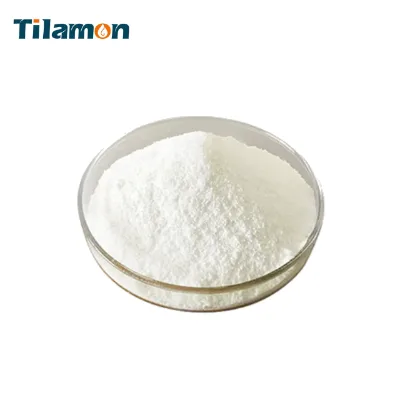
The foundation of any successful procurement strategy lies in a precise understanding of the technical specifications required for rubber applications. The core product data indicates that zinc oxide is fundamentally an oxide with a CAS number of 1333-86-4. While some product listings describe the substance as an "acidic oxide," others classify it as "amphoteric" or "alkaline." In the context of rubber compounding, the amphoteric nature is often the most relevant characteristic, as it allows the material to interact with both acidic and basic components within the rubber matrix. The physical appearance is consistently described as a white powder or white pigment, with a specific density ranging between 5.606 g/cm³ and 5.61 g/cm³.
For rubber applications, particle size is a critical differentiator. High-performance rubber grades often require a specific surface area to ensure efficient activation of the vulcanization system. The provided data mentions a Scanning Electron Microscope (SEM) measurement of 100~150 nm for certain variants, which suggests a nano-scale or fine particle distribution suitable for high-quality elastomers. Buyers should verify if the specific batch meets this particle size requirement, as coarser particles may result in uneven curing or reduced mechanical properties. The molecular weight is listed as approximately 81.38 to 81.39 g/mol, and the melting point is extremely high at 1975°C, with a flash point of 1436°C, indicating thermal stability during the high-temperature curing process.
The chemical solubility profile is also essential for processing. The data explicitly states that the product is insoluble in water, which is a standard characteristic for zinc oxide used in rubber. This insolubility ensures that the activator remains within the rubber matrix rather than leaching out during washing or exposure to moisture. When evaluating technical data sheets, buyers must confirm that the purity levels align with the specific rubber compound requirements, as impurities can interfere with the sulfur vulcanization reaction.
Compliance, Certification, and Grade Verification
Navigating the compliance landscape for industrial chemicals requires careful verification of grade standards. The supplied product information frequently cites "Industrial Grade" as the primary classification. However, the term "rubber grade" implies a subset of industrial zinc oxide that meets stricter purity and particle size criteria. While the data lists a "Grade Standard" of Industrial Grade, it also includes specific purity indicators such as "99%" and "99.7%." Buyers must not assume that all industrial-grade zinc oxide is suitable for high-performance rubber applications without explicit verification of the purity percentage and impurity limits.
Certification status is a frequent point of confusion in the sourcing process. The background information notes ISO 9001 as a low-confidence fact, meaning it should not be treated as a guaranteed attribute of every listed product. Instead of relying on generic certification claims, buyers should request specific test reports for the batch they intend to purchase. These reports should verify the chemical composition, particle size distribution, and loss on ignition. The data mentions various product models such as "MS-ZINC19," "zincoxide03," and "zinc oxide90," which may correspond to different purity levels or particle sizes. It is imperative to match the specific model number to the technical requirements of the rubber formulation.
Furthermore, the product origin is listed as China, with specific locations including Tianjin, Weifang (Shandong), and Hebei. While these are major industrial hubs, the geographic origin alone does not guarantee quality consistency. Buyers should verify that the supplier maintains a consistent quality control protocol regardless of the specific factory location. The absence of specific certification names in the high-confidence facts means that buyers must actively request documentation rather than assuming compliance with international standards.
Cost Drivers and Pricing Dynamics
Understanding the cost structure of zinc oxide is vital for budgeting and negotiation. The observed price range in the market data spans from 1 to 3000 USD, a wide variance that likely reflects differences in packaging, purity, quantity, and shipping terms rather than a single unit price. The Minimum Order Quantity (MOQ) ranges from 1 to 27 units, suggesting flexibility for small-scale buyers but potentially higher per-unit costs for smaller orders. For large-scale rubber manufacturers, economies of scale will likely drive the unit price down, but the total cost will be heavily influenced by the packaging type and logistics.
Packaging is a significant cost driver. The data lists several packaging options, including 25kg PP bags, 25kg paper bags, woven bags, and Ply Kraft Paper Bags. Some listings mention larger options like 500kg bags. The choice of packaging affects both the initial material cost and the handling costs at the destination. For rubber plants that use automated feeding systems, specific bag types or bulk containers may be required, which can influence the supplier's pricing. Additionally, the loading capacity is noted as 20FCL (20-foot container load), which is a standard metric for calculating freight costs. Buyers should calculate the cost per kilogram based on the total container load rather than the per-bag price to get an accurate picture of the landed cost.
Lead times also impact the overall cost of procurement. The data indicates a delivery time of 7-10 days after receiving the order. This relatively short lead time suggests a responsive supply chain, but buyers must account for potential delays in customs clearance or transportation from the origin cities of Tianjin, Guangzhou, or Weifang. The "Place of Shipment" being Guangzhou, China, for some listings while the "Origin" is elsewhere indicates a complex logistics network that could introduce variability in shipping costs.
Typical Applications in Rubber Manufacturing
Zinc oxide serves multiple functions in the rubber industry, primarily as an activator for the vulcanization process. The data highlights applications in "Paints, Inks, Coatings, Plastics," but its role in rubber is distinct. In rubber compounding, zinc oxide reacts with stearic acid to form zinc stearate, which accelerates the vulcanization reaction and improves the cross-linking density of the rubber. This results in improved tensile strength, abrasion resistance, and thermal stability.
The specific application of zinc oxide can vary based on the type of rubber being processed. For natural rubber and synthetic rubbers like SBR (Styrene-Butadiene Rubber) and NBR (Nitrile Butadiene Rubber), zinc oxide is a standard ingredient. The data mentions "White Pigment" as an application, which is relevant for colored rubber products where the white color of the zinc oxide does not interfere with the final product's aesthetics. Additionally, the material is used in "Printing and Dyeing" and "Paper Making," which suggests its versatility, but for rubber buyers, the focus remains on its performance as a vulcanization activator.
The particle size and purity directly affect the application performance. For high-performance tires or medical-grade rubber products, the finer particle size (100~150 nm) mentioned in the data is likely preferred to ensure uniform dispersion and optimal curing. In contrast, for general-purpose rubber goods, a coarser grade might suffice, provided the purity meets the minimum threshold. Buyers should align the product model and specifications with the specific end-use requirements of their rubber products to avoid over-specifying or under-specifying the material.
Supplier Evaluation and Service Capabilities
Evaluating potential suppliers requires a focus on their service capabilities and customization options. The product data confirms that "Customization" is available and that suppliers offer "Support OEM and ODM." This indicates that manufacturers are willing to tailor the product to specific buyer requirements, such as adjusting particle size, purity levels, or packaging formats. For rubber manufacturers with unique formulation needs, this flexibility is a significant advantage.
However, the availability of customization does not guarantee quality. Buyers should assess the supplier's ability to maintain consistency across different batches. The data lists multiple product models and packing types, which suggests a diverse product line. Buyers should verify that the supplier has the technical expertise to manage these variations without compromising quality. The "Quality" attribute is listed as "First Class," but this is a general observation rather than a verified standard. Buyers should request references or case studies from other rubber manufacturers who have used the supplier's products.
Logistics and shipping capabilities are also critical. The data mentions a loading capacity of 20FCL and a delivery time of 7-10 days. Buyers should evaluate the supplier's experience in handling international shipments, particularly from the listed origin points of Tianjin, Weifang, and Hebei. The "Place of Shipment" being Guangzhou for some listings suggests a hub-and-spoke logistics model, which can be efficient but requires coordination. Buyers should confirm the Incoterms and ensure that the supplier can provide all necessary documentation for customs clearance.
Quality Control and Long-Term Procurement Considerations
Implementing a robust quality control (QC) process is essential for mitigating risks in zinc oxide procurement. Given the variability in product models and specifications, buyers should establish clear acceptance criteria before placing orders. This includes verifying the CAS number, purity percentage, particle size, and physical appearance against the agreed-upon specifications. The data mentions a "Water Solubility" of "Insoluble in Water," which should be confirmed through laboratory testing if the buyer has specific concerns about moisture content.
Long-term procurement considerations involve building a stable supply chain. The observed MOQ range of 1 to 27 units suggests that suppliers are willing to accommodate both small and large orders. However, for consistent production, buyers should aim for a stable supply arrangement that ensures regular deliveries. The 7-10 day lead time is a key factor in inventory management, allowing for just-in-time delivery strategies. Buyers should also consider the "Kind" of the oxide, as the classification as amphoteric or alkaline can affect the chemical compatibility with other rubber additives.
Finally, buyers should maintain open communication with suppliers regarding any changes in product specifications or market conditions. The availability of customization and OEM/ODM support provides a mechanism for adapting to changing requirements. By focusing on verified technical data, clear quality standards, and reliable logistics, buyers can secure a steady supply of high-quality zinc oxide for their rubber manufacturing operations. The wide price range and diverse product models highlight the importance of due diligence in selecting the right product for the specific application, ensuring that the final rubber product meets all performance and safety standards.
FAQs
What is the purity level for rubber grade zinc oxide?
The product data lists purity levels of 99% and 99.7% for specific models. Buyers must verify the exact percentage against their rubber formulation requirements before purchasing.
How is the zinc oxide typically packaged for shipment?
Common packaging includes 25kg PP bags, paper bags, woven bags, and Ply Kraft Paper Bags. Some listings also offer 500kg bags for bulk industrial needs.
Can suppliers customize the particle size for rubber applications?
Customization is available for this product, allowing adjustments to meet specific needs. Some variants show a particle size of 100 to 150 nanometers suitable for high-performance rubber.
What is the standard delivery time after receiving an order?
The typical delivery time is 7 to 10 days after the order is received. This lead time applies to the standard supply chain from the listed Chinese origin points.
Which chemical properties define this zinc oxide for rubber use?
It is an amphoteric oxide with a density of 5.61 g/cm³ and is insoluble in water. These properties ensure stability and effective activation during the rubber vulcanization process.
What is the minimum order quantity for purchasing this material?
The observed minimum order quantity ranges from 1 to 27 units depending on the supplier. Buyers should check specific listings to confirm the exact MOQ for their intended volume.